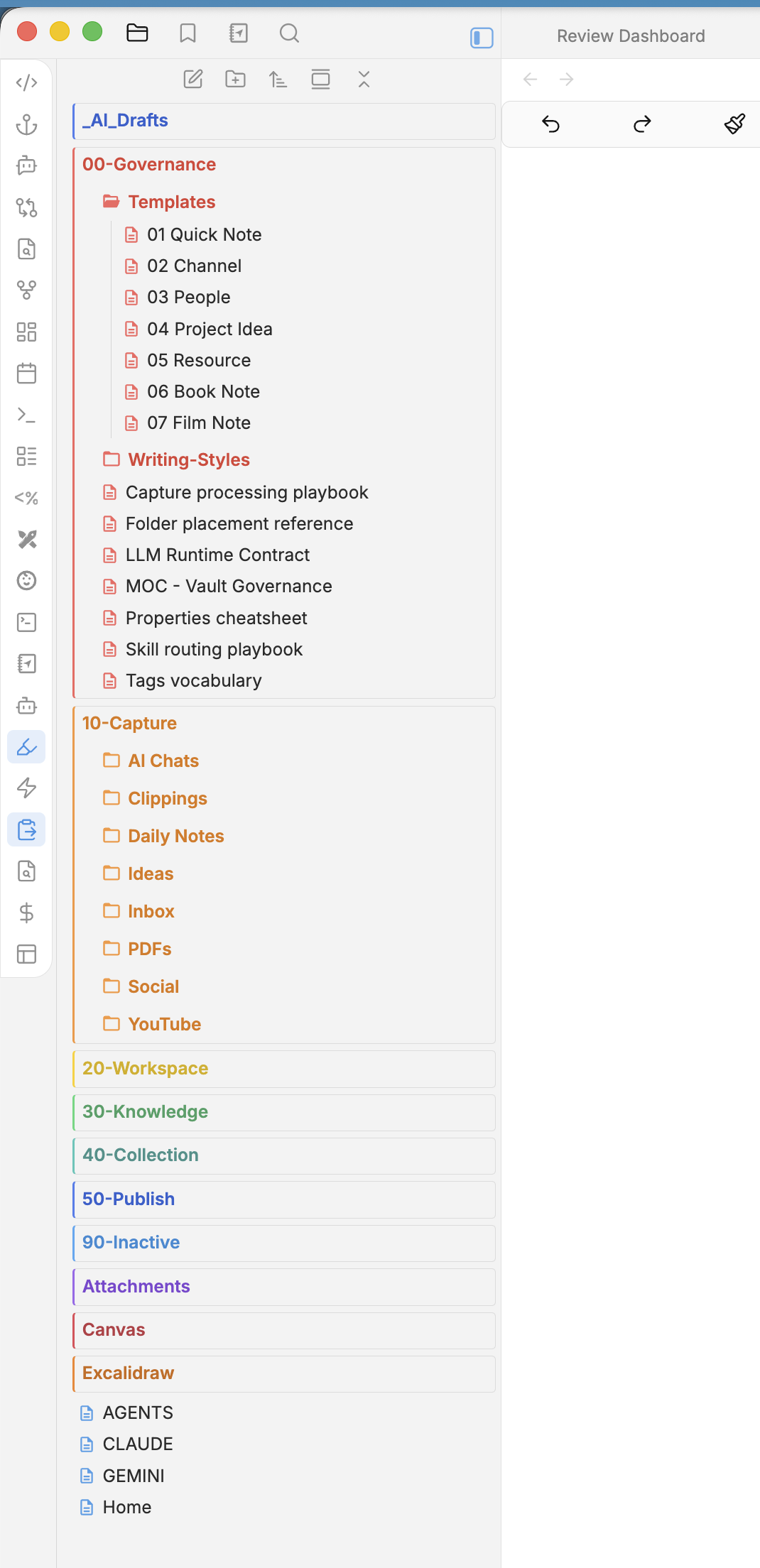
I was watching my Nth Obsidian YouTube video that week. This one was about PARA. Logical, well-structured, convincing. I nodded along, opened Obsidian, and froze. I had no idea where to start.
That feeling repeated itself for two weeks straight.
1. The trap of other people’s methods
The first thing I did when I started using Obsidian was look up how other people use it. PARA, Zettelkasten, FLOW, LLM Wiki, Ideaverse — every method had someone explaining it persuasively, and every one of them looked brilliant at the time.
The problem was that I dove into reading and watching before I had any real note-taking experience of my own. I was a blank page soaking up ink from too many sources at once. When I tried to implement what I’d seen, I couldn’t follow through. Instead of the system adapting to my habits, I was trying to reshape my habits to fit the system.
The result was a predictable loop: get excited → organize everything → slack off once → never come back → abandon the vault.
I burned nearly half a month on this phase.
2. Beautiful folders aren’t the point
After trying enough methods, I noticed something small that changed how I thought about the whole problem.
I was organizing folders to make them look good — not to retrieve information quickly.
When you walk into a library to find a book, you don’t need to know which shelf it’s on or which floor or which aisle. You just tell the librarian: “Find me this book.” The catalog does the rest.
PKM works the same way at scale. As your notes grow, retrieval becomes query-based — tags, properties, wikilinks, search — not a memory game of which subfolder something lives in. A five-level folder hierarchy looks satisfying to browse but does nothing for how you actually look things up.
This is also when I started to understand why Obsidian is built around bidirectional links and graphs rather than a directory tree.
3. Asking the right question in the AI era
Instead of continuing to search for a method that fit, I shifted to a different question:
Why not ask AI to help me design a system around my actual habits?
I started with a simple prompt:
I'm building an Obsidian PKM and looking for an operating method.
I've tried PARA, Zettel, Ideaverse and none of them felt natural
to how I work. I'd like you to help me explore and build a
Governance system for my Obsidian vault that produces:
- A folder and file structure
- Storage rules
- A weekly audit plan

What I want as output: a folder structure, note templates,
and a way to write and manage notes.
Then I described my actual daily behaviors:
- I browse tech news and save links or content when something catches my eye
- I get sudden ideas and need to capture them quickly
- I take notes in meetings using a consistent format
- Later I go back and process information in a way that matches how I like to learn
- I want to write blog posts from things I’ve already understood
AI didn’t judge any of this. It listened, asked follow-up questions, and co-designed a Governance — a set of operating rules built around those specific behaviors.
After some back-and-forth, I had a vault structure with clear operating rules.
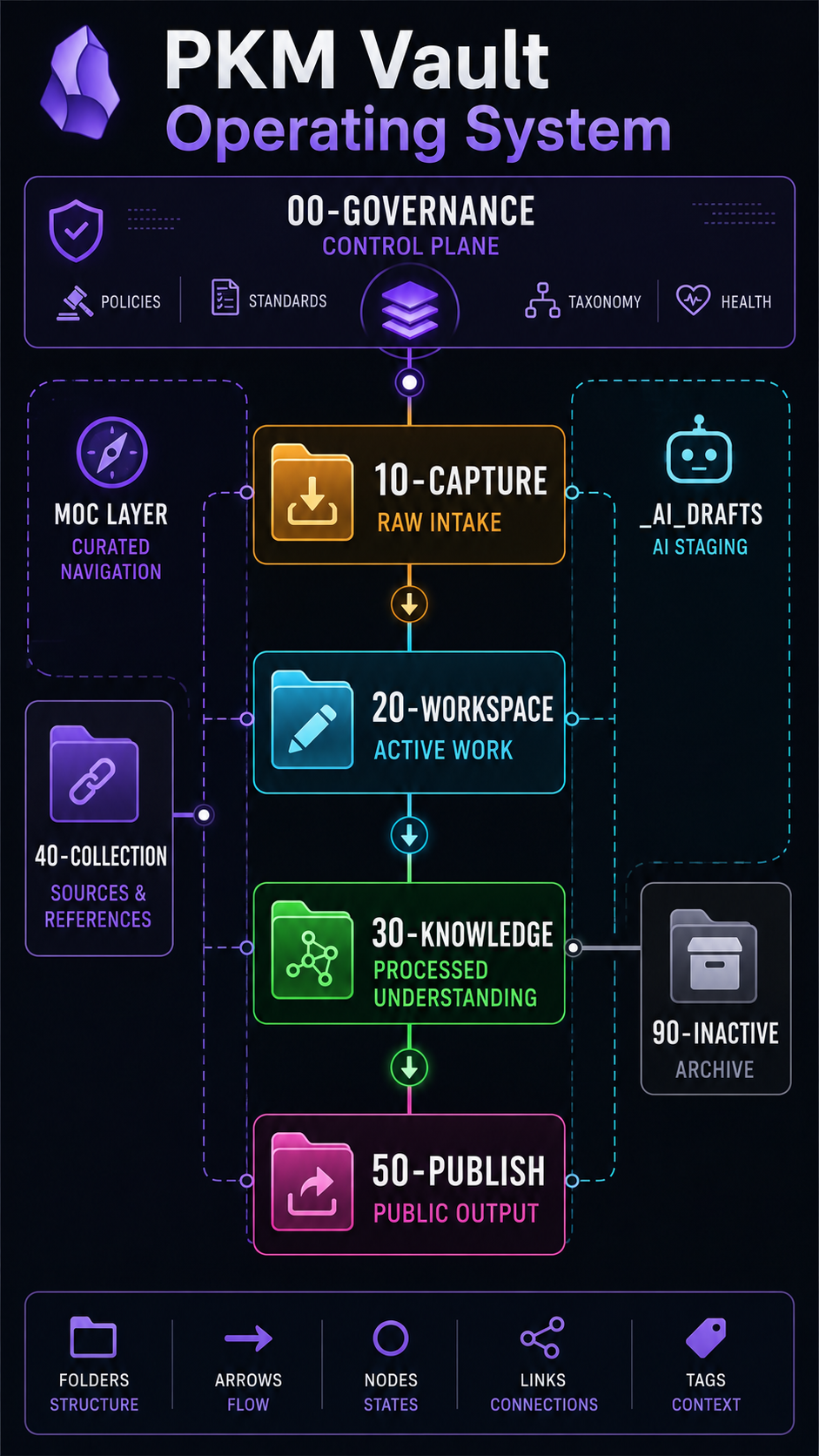
Vault Operating System
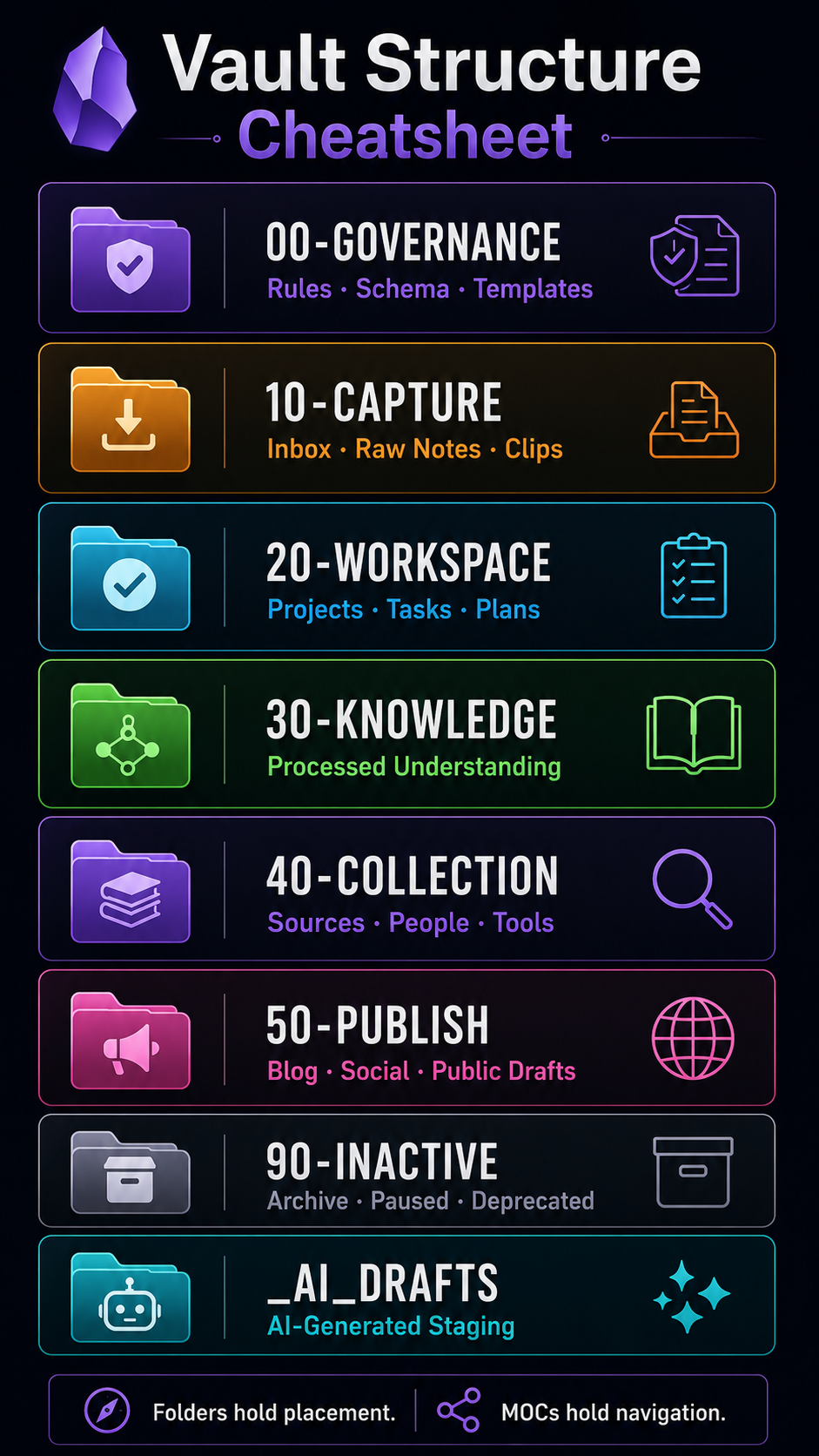
Vault Structure Cheatsheet
4. Keeping the system alive with AI agents
Having a structure isn’t enough. The real challenge is maintenance — and that’s exactly where I’d always failed before.
In the AI era, this becomes a solvable problem. I use Claude, Codex, and some free LLMs to handle vault maintenance tasks. Through the Claudian plugin, AI can interact directly with the vault and work according to the established Governance rules — handling organization, refactoring, and audits while I focus on capturing notes and having conversations.
It’s like having a dedicated assistant who manages the vault according to rules you set.
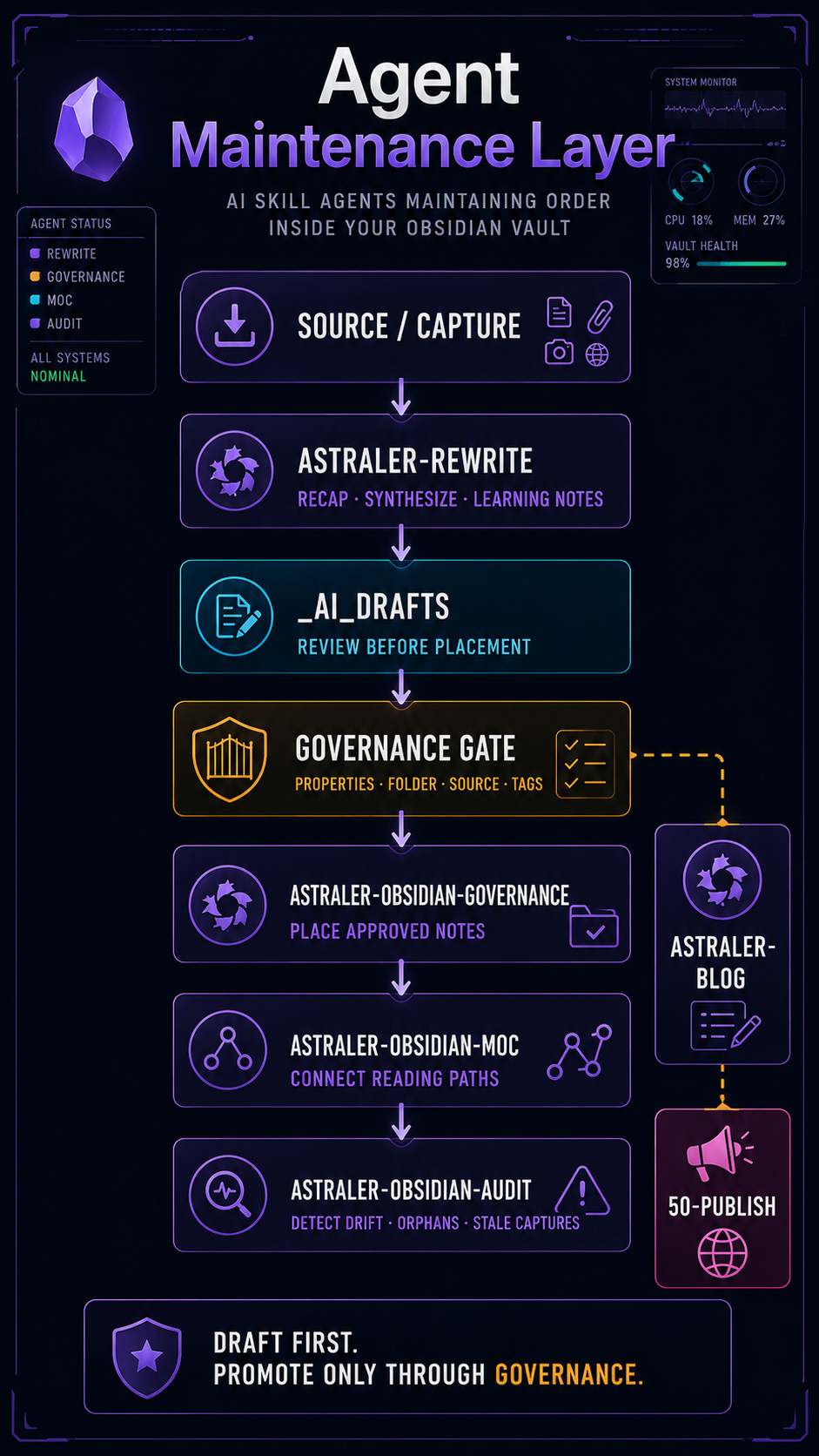
Agent Maintenance Layer
I built a set of agent skills to automate most of this maintenance work:
5. Plugins make it usable
An Obsidian vault without plugins is like a kitchen without knives. The community plugin ecosystem is one of the best things about the tool — it turns a bare-bones vault into a real workspace.
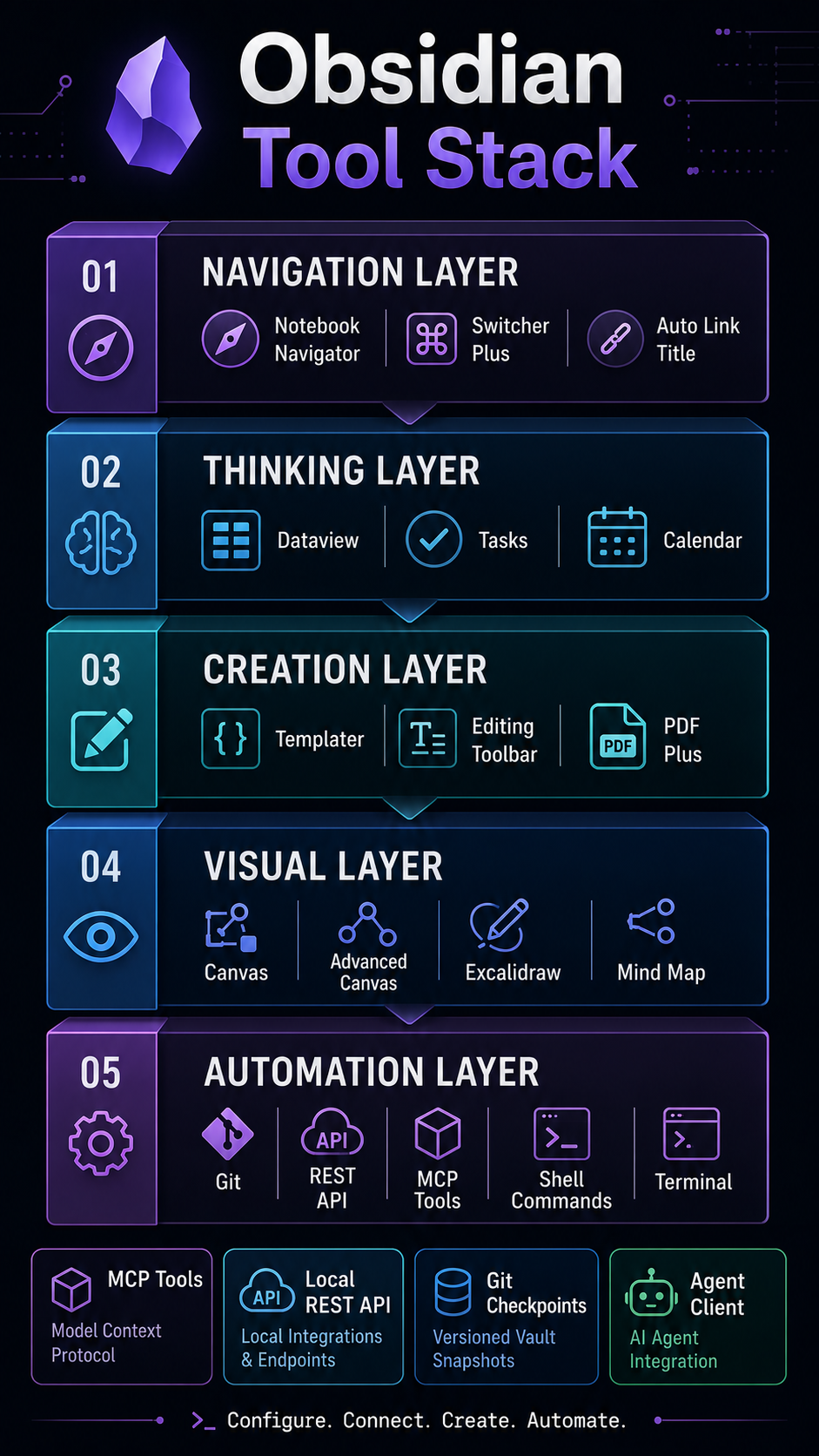
Obsidian Plugin Stack
6. Publishing when your vault is stable
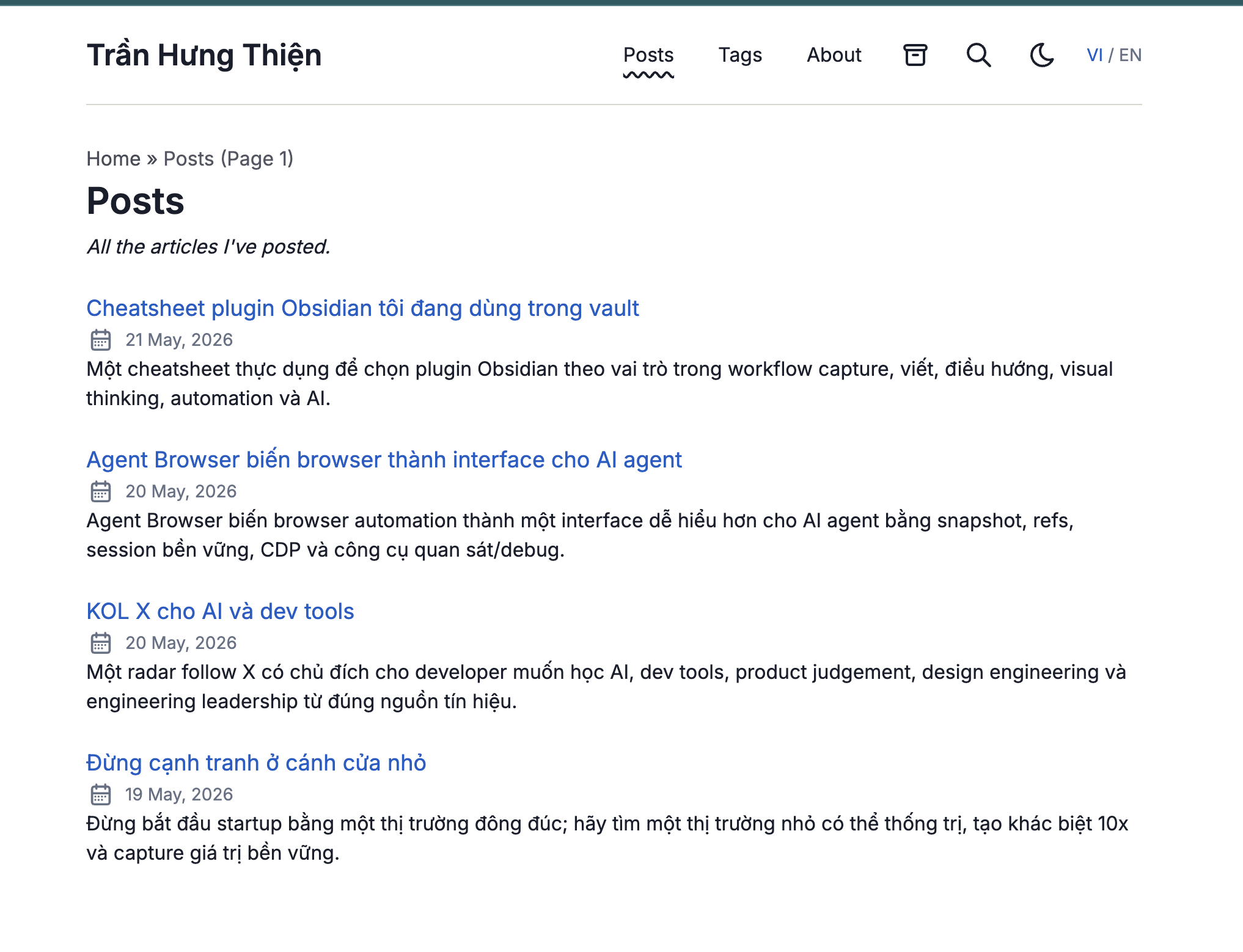
Once the vault is running smoothly, you’ll naturally want to share what you’ve learned. I use Astro + Cloudflare Pages to publish a blog directly from the vault — free to host, fast, and content syncs straight from Obsidian.
The point of this post isn’t my specific folder structure, my agent skills, or my plugin list. The point is this:
Building Obsidian is building a system that serves your habits — not someone else’s.
When a framework resonates with you, it’s probably because your daily behaviors are already close to the person who built it. But if you don’t yet know what you need, don’t copy first. List out what you actually do every day and let AI help you design from there.
The system that serves you best is the one you build yourself — even if it looks less polished than what someone else is using.